
If you are considering orthodontic treatment, you have probably already asked yourself: braces or Invisalign? It is one of the most common questions our team hears at MBraces, and the honest answer is that there is no single right answer for everyone. The best choice depends on your specific case, your lifestyle, your age, and your personal preferences. Here is a clear, objective breakdown to help you understand the differences.
How Each Treatment Works
Traditional Braces
Traditional braces use metal or ceramic brackets bonded directly to the surface of each tooth, connected by an archwire that runs through them. Dr. Mazumder adjusts the wire at periodic appointments — typically every four to eight weeks — progressively guiding your teeth into their ideal positions. Braces are a fixed appliance, meaning they stay on your teeth continuously throughout treatment. You cannot remove them.
Invisalign
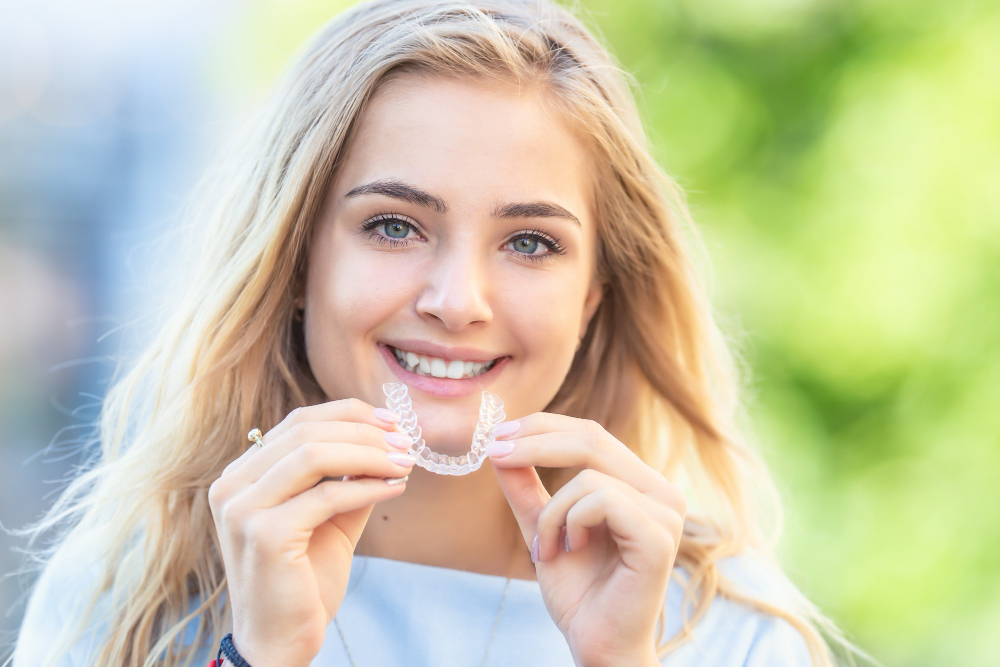
Invisalign uses a series of custom-fabricated, clear plastic aligners — each worn for approximately two weeks before progressing to the next set. Each aligner is slightly different, incrementally moving your teeth toward the final planned position. Unlike braces, Invisalign aligners are removable: you take them out to eat, drink anything other than water, and to brush and floss. Dr. Mazumder is an Invisalign Certified Preferred Provider at all three MBraces locations. Learn more on our Invisalign page.
Comparing the Two: Key Differences
Appearance
Invisalign wins on discretion. The clear aligners are nearly invisible when worn — most people will not notice them. Ceramic braces are more discreet than metal but still visible up close. Traditional metal braces are the most noticeable option, though many teen patients enjoy personalizing them with colored bands.
Comfort
Both options cause some initial soreness when new forces are applied. Braces can cause irritation to the lips and cheeks from bracket edges and wires, especially in the early weeks. Invisalign aligners have smooth edges and no wires, which many patients find more comfortable overall. Orthodontic wax can relieve bracket irritation; our Life With Braces guide covers this in detail.
Oral Hygiene
Invisalign has a clear advantage here. Because aligners are removable, you can brush and floss normally — no special tools needed. With braces, food can become trapped around brackets and wires, and proper cleaning requires floss threaders, interdental brushes, and extra time. Patients who are meticulous about hygiene do fine with braces; those who struggle with thorough cleaning may find Invisalign easier to manage. See our brushing and flossing guide.
Diet Restrictions
With braces, a number of foods must be avoided — hard candies, popcorn, bagels, caramel, gum, and anything else that could break brackets or get stuck in wires. With Invisalign, you simply remove your aligners before eating, so there are no food restrictions at all.
Compliance Required
Braces require no compliance beyond keeping appointments and avoiding restricted foods — they work around the clock because they are attached to your teeth. Invisalign requires significant self-discipline: aligners must be worn 20 to 22 hours per day. Patients who leave their aligners out too often will not achieve the expected tooth movement on schedule. This is why Invisalign is generally recommended for motivated teens and adults rather than younger children.
Effectiveness for Complex Cases
Both options are highly effective for a wide range of orthodontic concerns, including crowding, spacing, overbite, underbite, crossbite, and overjet. For very complex bite corrections — particularly cases requiring significant vertical movement or precise torque control — traditional braces may provide slightly more control. Dr. Mazumder will assess your specific case and recommend the option best suited to your clinical needs.
Cost
The cost of Invisalign and traditional braces is generally comparable at MBraces. Both are covered to varying degrees by most orthodontic insurance plans, including Husky. We also offer flexible no-interest payment plans for both treatment options. For an accurate cost comparison specific to your case, visit our Easy Financing page or ask at your free consultation.
Who Is Invisalign Best For?
Invisalign tends to be an excellent fit for:
- Adults and older teens who are self-conscious about the appearance of braces
- Patients with mild to moderate crowding, spacing, or bite issues
- Patients who are highly motivated and will reliably wear aligners as directed
- Patients who play wind instruments, contact sports, or have professions where appearance matters
- Patients who have completed previous orthodontic treatment and experienced minor relapse
Who May Be Better Suited to Traditional Braces?
Traditional braces may be the better choice for:
- Younger teens or children who may not reliably wear removable aligners
- Patients with more complex bite corrections requiring maximum control
- Patients who prefer not to have to track or manage a removable appliance
- Patients looking for the most cost-effective option in complex cases
The Best Way to Decide: Come In for a Free Consultation
The most important step is not reading articles — it is coming in for an evaluation. At MBraces, we offer free consultations at our offices in Bristol, Rocky Hill, and Waterbury. Dr. Mazumder will examine your teeth and bite, discuss your goals and lifestyle, and give you a clear, honest recommendation on which treatment option is the best fit for your specific situation.
Call Bristol at (860) 589-3316, Rocky Hill at (860) 563-6563, or Waterbury at (203) 754-7822 to schedule your consultation today.
Frequently Asked Questions
Can Invisalign fix a bad bite?
Yes, Invisalign can address many bite issues including overbite, underbite, crossbite, and open bite. For very severe skeletal bite discrepancies, additional appliances or treatment approaches may be needed alongside Invisalign. Dr. Mazumder will assess your bite during your free consultation.
Is Invisalign suitable for teenagers?
Invisalign Teen is specifically designed for adolescent patients and includes compliance indicators and provision for erupting teeth. It works well for motivated teens. Patients who are unlikely to consistently wear their aligners for 20 to 22 hours per day are typically better suited to traditional braces.
Can I switch from braces to Invisalign mid-treatment?
In some cases, yes — but it requires a full re-evaluation and planning process. If you are unhappy with your current treatment method, discuss it with Dr. Mazumder at your next appointment so he can assess what is possible and appropriate for your stage of treatment.
Do ceramic braces stain?
The ceramic brackets themselves are stain-resistant, but the elastic ties that hold the wire to the brackets can discolor over time from coffee, tea, certain foods, and some mouthwashes. They are replaced at each adjustment appointment, so any staining is temporary. Patients who drink a lot of coffee or tea may find the ties look yellow between visits.
Will either option affect my speech?
Both options can cause a brief adjustment period for speech. With Invisalign, a slight lisp is common for the first few days as the tongue adjusts to the aligners. With braces, patients occasionally notice a slight change in feel, though significant speech effects are rare. Both adjustments resolve quickly in most cases.