
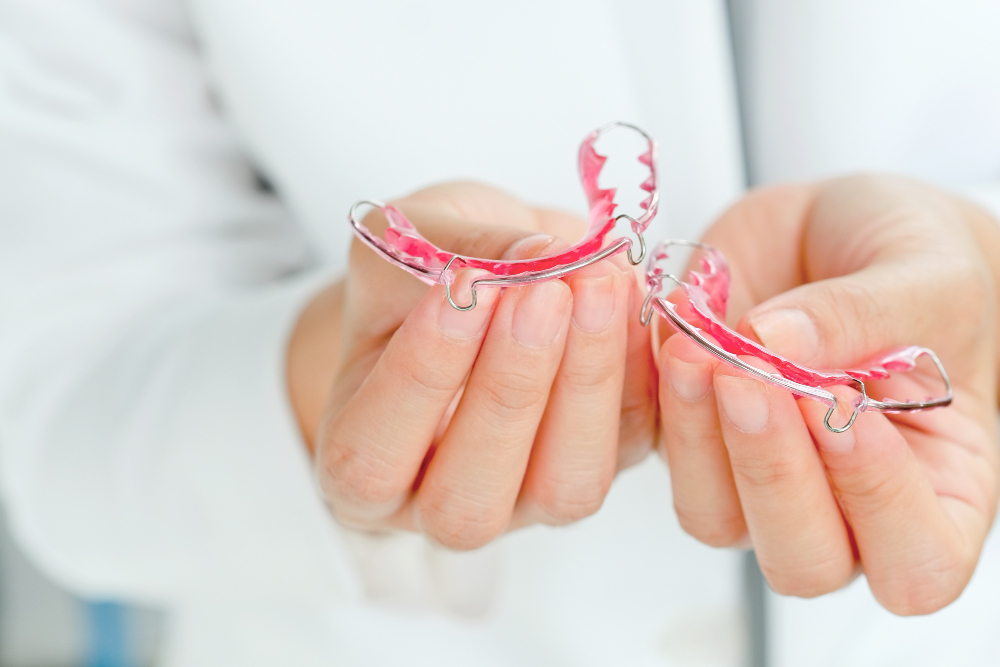
Getting your braces off is one of the most exciting moments in orthodontic treatment. After months or years of effort, you finally have the straight, healthy smile you worked so hard to achieve. But that milestone comes with an important responsibility: wearing your retainer.
At MBraces, we cannot stress this enough — a retainer is not optional, and not just for the first year. It is a lifelong commitment that protects everything you invested in your treatment. Here is why.
Why Do Teeth Shift After Braces?
The movement of teeth during orthodontic treatment is possible because bone is not static — it is constantly remodeling in response to pressure. Braces apply controlled force that gradually moves teeth through the surrounding bone tissue. When braces are removed, the bone around your newly positioned teeth has not yet fully mineralized and stabilized. The surrounding ligaments and tissues, which anchor teeth in their sockets, still have a “memory” of their original position and will attempt to pull teeth back.
Without a retainer holding teeth in their new positions, this relapse begins almost immediately — sometimes within days. Over weeks and months without retention, significant shifting can occur, undoing months or years of treatment.
Types of Retainers
Removable Hawley Retainer: A traditional retainer made of a plastic base that fits the roof of the mouth (or the inside of the lower arch) with metal wires that loop around the front teeth. Durable and adjustable, and can be worn indefinitely.
Clear Retainer (Essix/Vivera): A clear plastic tray similar in appearance to an Invisalign aligner. More discreet than a Hawley retainer. Needs to be replaced periodically as plastic wears down over time.
Fixed (Bonded) Retainer: A thin wire bonded to the back surfaces of the front teeth. Completely invisible and requires no patient compliance since it is always in place. Requires careful cleaning with floss threaders and regular monitoring by your dentist. Some patients have a fixed retainer placed on the lower front teeth — where relapse is most common — in combination with a removable retainer for the upper arch.
Dr. Mazumder will recommend the most appropriate retainer type or combination based on your specific treatment and the anatomy of your teeth. Learn more about retainers and other orthodontic appliances.
How Long Do I Need to Wear My Retainer?
The short answer: indefinitely. Retainer wear is typically most intensive immediately after treatment — often full-time for the first few months — and then gradually reduces to nighttime wear only. Most orthodontists, including Dr. Mazumder, recommend nighttime retainer wear indefinitely to maintain your results long-term.
Teeth continue to undergo minor shifts throughout life as the mouth ages and as normal jaw forces act on them. A retainer worn at night provides ongoing protection against these natural changes. Many adults who wore retainers consistently for years after treatment find that if they stop, they begin to notice gradual changes. The minimal effort of nightly retainer wear is worth the long-term protection.
What Happens If I Stop Wearing My Retainer?
If you stop wearing a removable retainer, teeth will begin to shift. How quickly and how significantly this happens depends on the individual, the original case complexity, and how long it has been since treatment was completed. Some patients notice changes within weeks; others see gradual changes over years.
If you have stopped wearing your retainer and have noticed shifting, do not panic — but do not ignore it either. In many cases, if you still have your retainer and it still fits, resuming wear will halt any further shifting. If the retainer no longer fits, contact our office. Additional treatment may be needed, but the earlier you address it, the simpler the correction.
We see many adult patients at MBraces who had braces as teenagers, stopped wearing their retainers, and years later seek treatment to correct relapse. A new short course of treatment — sometimes as little as six months with Invisalign Express — can often restore the results. Learn more about adult orthodontic treatment.
Caring for Your Retainer
- Rinse removable retainers under lukewarm water when you remove them each morning
- Clean daily with a soft toothbrush and unscented liquid soap or a retainer cleaning tablet
- Never soak in hot water or expose to high heat — this warps the plastic
- Always store in the provided case when not in your mouth
- Bring your retainer to dental checkups so your dentist can monitor its condition
- If a retainer breaks or no longer fits comfortably, contact MBraces to have it assessed and replaced
For guidance on completing your treatment and transitioning into the retention phase, call any of our offices — in Bristol, Rocky Hill, and Waterbury. We are always happy to answer questions about retention and long-term smile maintenance.
Frequently Asked Questions — Retainers
What do I do if I lose my retainer?
Contact our office as soon as possible to arrange a replacement. Do not wait and see — teeth can begin shifting within days without a retainer, particularly in the early post-treatment period. We can take new impressions or scans and fabricate a replacement retainer promptly.
Can I wear my retainer too much?
No. Wearing your retainer more than prescribed is not harmful. If anything, extra wear provides additional protection. The only situation where over-wear becomes a consideration is if your retainer is old, worn, or distorted — in which case it should be replaced rather than worn more.
My retainer feels tight when I put it in after not wearing it for a few days. What should I do?
A tight retainer that still fits over your teeth is a sign that some minor shifting has occurred. Wearing it regularly should bring your teeth back into position. If it does not fit at all or feels very painful, contact our office for an assessment.
Does a fixed retainer require special care?
Yes. A bonded wire retainer requires floss threaders or an orthodontic flosser to clean under the wire between teeth. The wire should also be examined by your dentist at each checkup for any signs of loosening or breakage. If a fixed retainer comes loose, contact our office promptly — without the wire, the teeth it was protecting may begin to shift.
How much does a replacement retainer cost?
Replacement retainer fees vary. At MBraces, we aim to keep these costs reasonable and will discuss pricing with you clearly. The cost of a replacement retainer is far less than the cost of retreatment for relapsed teeth — making consistent retainer care a sound investment.