
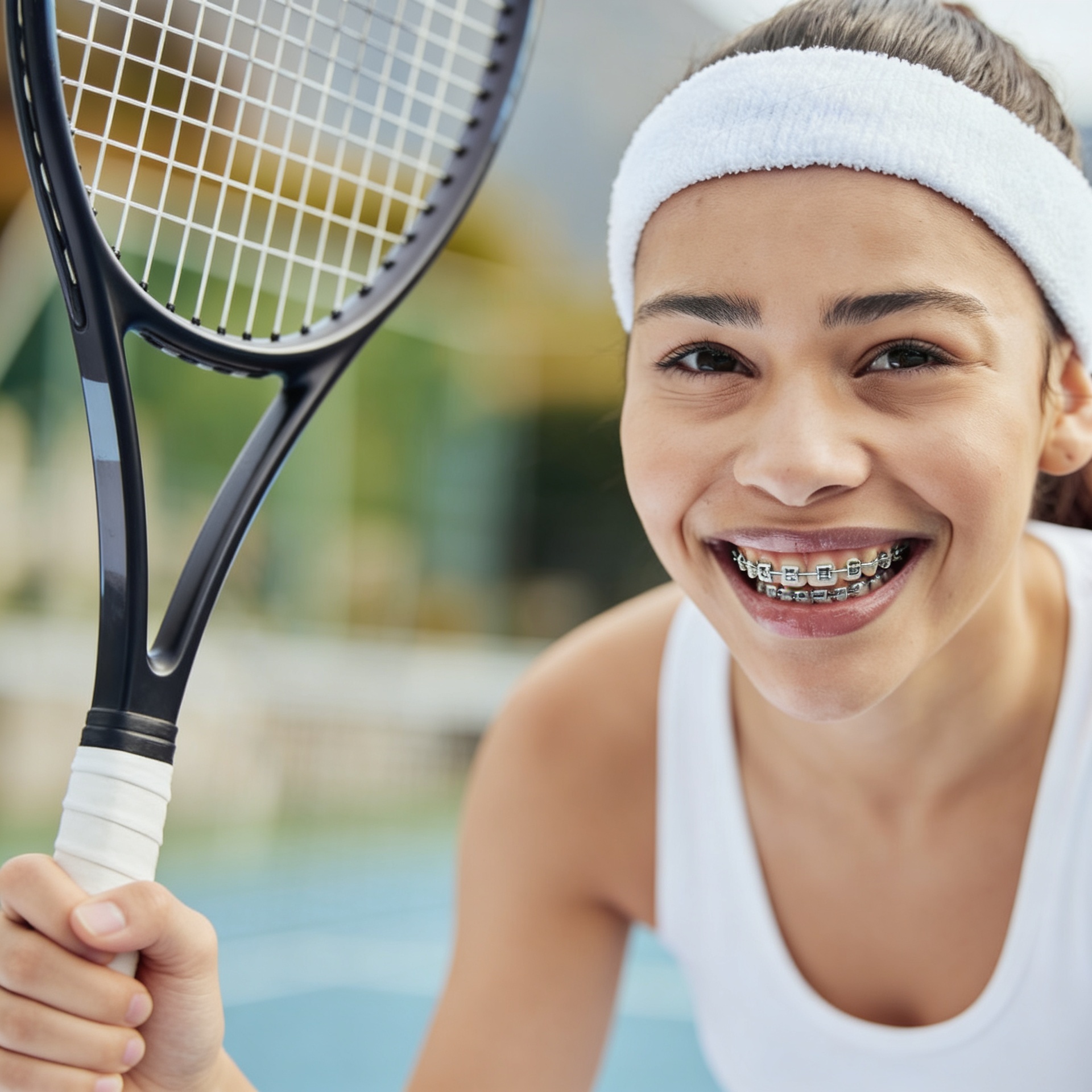
Being in orthodontic treatment does not mean sitting out the sports you love. At MBraces, we have treated athletes of all ages — youth soccer players, high school basketball stars, competitive swimmers, martial artists, and everything in between — from our offices in Bristol, Rocky Hill, and Waterbury, Connecticut. With the right precautions, orthodontic treatment and an active sports life are entirely compatible.
The Key Rule: Wear a Mouthguard
For any sport that involves physical contact, a ball, or the risk of impact to the face, wearing a mouthguard during practice and competition is essential when you have braces. This is not optional.
A properly fitted mouthguard serves two critical purposes. First, it protects your teeth and soft tissues (lips, cheeks, tongue) from injury. Second, it protects your orthodontic appliances from damage that would require an emergency repair appointment and potentially disrupt your treatment schedule.
For patients with traditional braces, an orthodontic mouthguard — designed to accommodate brackets and wires — is recommended over a standard boil-and-bite model. Orthodontic mouthguards are available at most sporting goods stores and online. Ask our team at any of our offices for a specific recommendation if needed.
For Invisalign patients, the aligners themselves are not mouthguards. Remove them before contact activities and wear a proper athletic mouthguard. Reinstate your aligners promptly after the activity.
What to Do If Something Breaks During a Game
Even with a mouthguard, accidents happen. Here is what to do if you experience a dental or appliance injury during athletic activity:
- Remove yourself from play and find a safe area to assess the situation
- Rinse your mouth gently with clean water
- Check your teeth for looseness or fractures, and check your brackets and wires for damage
- If a wire is poking you, use orthodontic wax to cover it until you can be seen
- If a tooth has been knocked loose or out of position, this is a dental emergency — seek care immediately
- If only a bracket is loose or broken, this is urgent but not an emergency — call our office as soon as possible
For detailed guidance on managing common appliance problems at home, see our Emergency Care page and our Life With Braces guide.
Sports That Require Extra Caution
High-contact sports (football, hockey, wrestling, martial arts, boxing, rugby): These sports carry the highest risk of facial and dental injury and absolutely require a well-fitted orthodontic mouthguard. Mouth and face guards are often mandatory equipment — be sure your guard accommodates your braces.
Ball sports with projectile risk (basketball, baseball, softball, lacrosse, soccer): Flying elbows and balls can cause unexpected impacts even when full-contact is not the nature of the sport. A mouthguard is strongly recommended.
Gymnastics and cheerleading: Falls and tumbling carry real risk of facial impact. Mouthguards are recommended even though contact between players is not the primary concern.
Swimming: No special precautions are needed for swimming. The water does not affect braces or Invisalign aligners, though Invisalign patients should ideally remove their aligners before extended swimming sessions.
Talking to Coaches and Teammates
It can feel awkward to speak up about your orthodontic treatment with coaches or teammates, but most coaches are supportive and familiar with athletes in braces. If you need a moment to check your appliance after a collision or use wax to address an irritation, most coaches will understand. Do not let self-consciousness prevent you from protecting your teeth and appliances.
Frequently Asked Questions — Sports and Braces
Can I wear a regular mouthguard over braces?
Standard boil-and-bite mouthguards are not well-suited to braces because they cannot accommodate the brackets and wires and may exert uneven pressure or break against the hardware. An orthodontic mouthguard, designed specifically for use with braces, is strongly recommended and available at most sports retailers.
What if I play a wind instrument? Will braces affect my playing?
Most musicians adapt to braces within a few weeks. Lip pressure and embouchure adjust to the new surface of the brackets. Orthodontic wax on specific brackets can help reduce irritation to the lips during this adjustment period. Talk to Dr. Mazumder at your next appointment about any specific concerns related to your instrument.
Can I wear Invisalign aligners during sports?
For non-contact sports with no impact risk (running, cycling, swimming), Invisalign aligners can be worn during activity. For any contact sport or activity with impact risk, remove aligners and wear a proper mouthguard. Reinsert aligners promptly after activity to maintain your daily wear time.
I play football and wear a face mask. Do I still need a mouthguard with braces?
Yes. A face mask protects against some impacts but does not prevent all dental injuries. Mouthguards are mandatory equipment in most organized football programs and are equally important for athletes with braces. Make sure your mouthguard is designed for use with orthodontic appliances.
Will getting hit in the mouth with braces on make my injury worse?
Braces can potentially increase soft tissue injury (cuts to the lips and inner cheeks) if impact occurs because the brackets create harder edges. An orthodontic mouthguard minimizes this risk significantly. If impact does occur without a mouthguard, check your lips, cheeks, and tongue for lacerations in addition to checking your appliances.